
Attitude Is Contagious
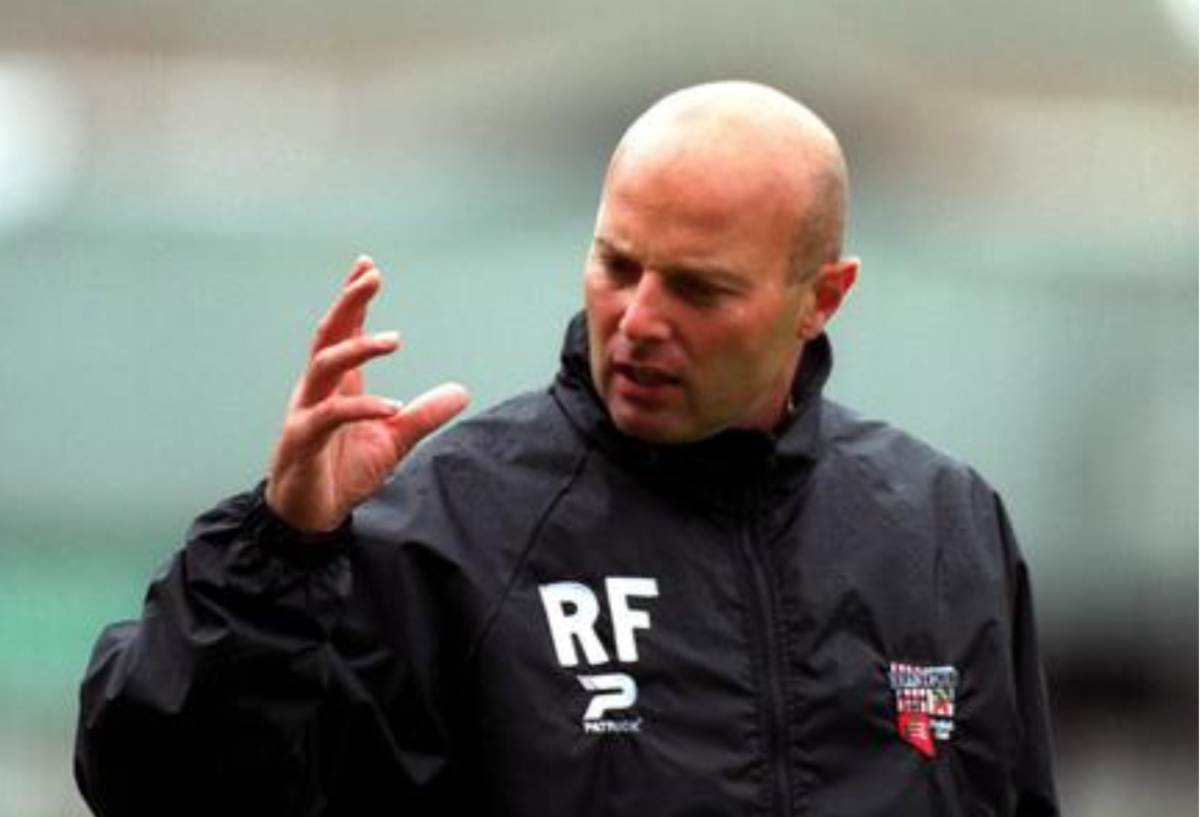
Brentford, May 2002. The Millennium Stadium in Cardiff, more than forty-two thousand people, and a wall of noise so dense you could not hear the man standing next to you. I have given thousands of instructions to players across four decades in sport. That afternoon, in the biggest game of the season, I could not give a single one. And in that strange silencing of the useful voice, a whole season came into focus around four words a manager had said to us months earlier: attitude is contagious.
A team that beat every expectation
That Brentford side, under Steve Coppell, had no business getting as far as it did, and that is exactly what made it special. We finished third in the Second Division, the third tier of English football, narrowly missed out on automatic promotion, and reached the play-off final against a strong Stoke City. Lloyd Owusu scored goals for fun. The dressing room was full of characters and grafters rather than household names. On paper, several sides above us had more. We had something harder to measure and harder to beat.
Steve Coppell is one of the most intelligent managers I have ever worked with. He read that season with a calm that the whole squad fed off, never overreacting to a result, always returning the group to the same few simple standards. Under pressure, a manager’s composure is not a private quality. It spreads. The players took their emotional temperature from him, and he knew it.
The loudest lesson
Which brings me back to the noise. People assume the most valuable coaching happens in the big moments. The Brentford final taught me the opposite. When the stadium is at its loudest, you cannot coach at all. You can shout into a player’s ear and he will not catch a word. Whatever a team is going to carry onto the pitch, they carry it in with them, fully formed, before the whistle goes.
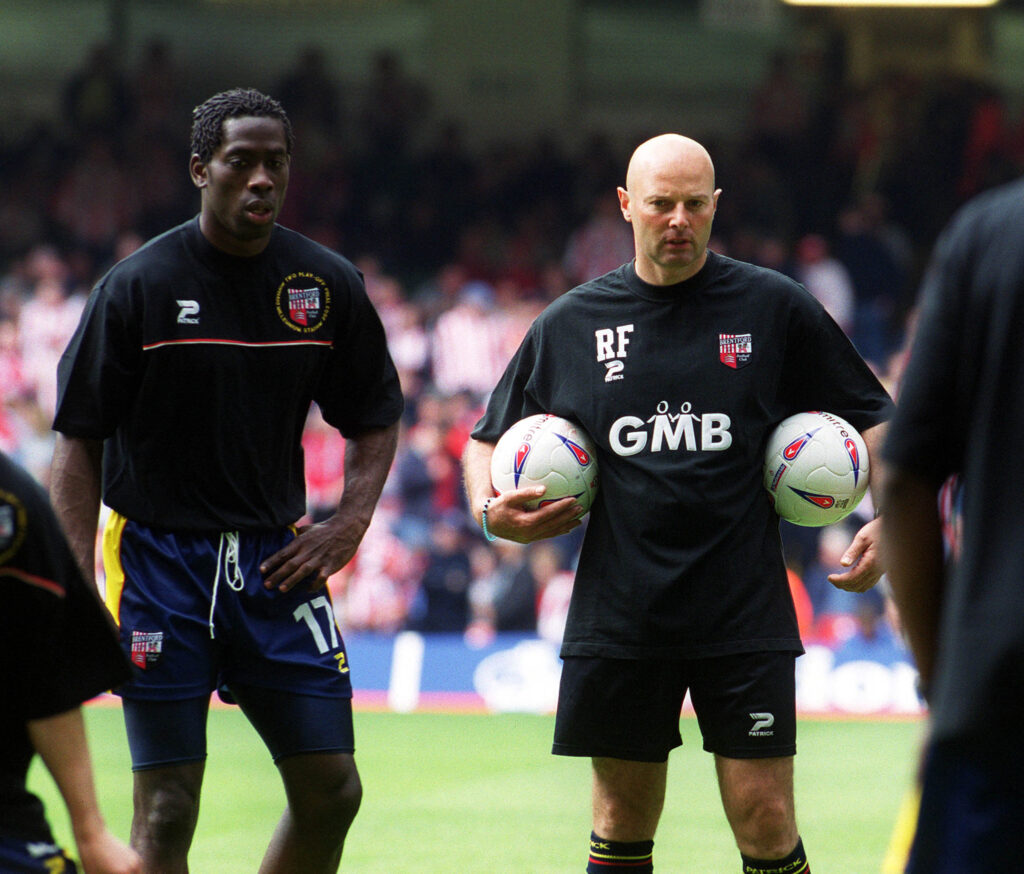
That changes how you think about leadership. If your influence runs out the instant the pressure peaks, then everything that matters has to be built beforehand: the preparation, the standards, and above all the mood. The warm-ups, which were always among the best parts of the week, were not a box to tick. They were where the group’s real attitude showed itself, long before kick-off. The photograph with this piece is from the warm-up before the final, with Mark McCammon, Steve Sidwell and Ivar Ingimarsson, three very different characters, setting the tone in their own ways.
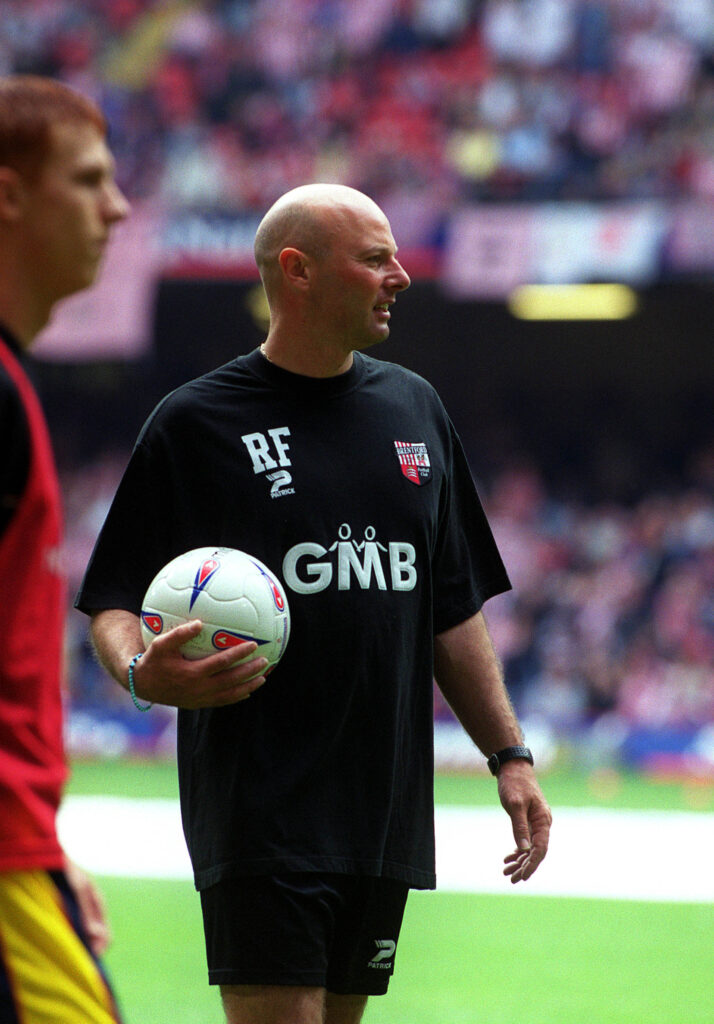
Play off Final, Millenium Stadium 11/05/02 ROBERTO FORZONI
“Attitude is contagious. Is yours worth catching?”
One ordinary morning that season, Steve walked into the dressing room, looked around the squad, and said the line that has stayed with me ever since.
“Attitude is contagious. Is yours worth catching?”
At the time it landed as a great piece of motivation. Years later, I realised it was also an accurate description of how teams actually function. The psychologist Sigal Barsade called it the ripple effect. In her research on emotional contagion in groups, she showed that one person’s mood spreads measurably through the people around them, shaping cooperation, conflict, and how the group performs, often without anyone consciously noticing it. Earlier work by Elaine Hatfield and colleagues found that humans automatically mimic and synchronise with each other’s emotional states, almost like catching a current.
So Coppell’s question was not a slogan. It was a workplace fact dressed up as a challenge. Your attitude is never a private possession. The moment you walk through the door, you become an input to everyone else’s day. The person who arrives flat, or cynical, or quietly excusing themselves, is not just having a bad morning. They are exporting it. And the person who arrives with energy and standards is doing the same thing in reverse. Is yours worth catching?

Play off Final, Millenium Stadium 11/05/02
IVAR INGIMARSSON and ROBERTO FORZONI
The result, and what outlasted it
We lost the final two-nil. It hurt, and it still does a little, the way the games you nearly won always do. But more than twenty years on, I understand what that season truly gave us, and none of it showed on the scoreboard.
There is a strand of research, led by the psychologist Brock Bastian, showing that shared adversity bonds people together. Going through something hard, as a group, with a common goal, forges connections that comfortable success rarely matches. That is the only way I can explain what happened with that Brentford squad. A good number of those players are still in regular contact today: Mark Williams, Lloyd Owusu, Mark McCammon, Paul Gibbs and Ijah Anderson among them. A single season, chasing something difficult together, built friendships that have lasted a lifetime. I will always be grateful to Steve Coppell for the culture that made that possible.
The legacy a league table never records
This is the part of a team that the table never captures. The result is the goal, and you chase it with everything you have. But the culture, and the bonds it leaves behind, are the legacy. A trophy is won on one afternoon. The way a group made each other feel, and the standards they held each other to, can last for decades.
It is also why I argue, in all my work, that psychology is not a bolt-on to performance but the foundation beneath it. That Brentford season’s most durable output was not technical or tactical or physical. It was the attitude the squad created and caught from one another. Get that right and everything else has a chance to flourish. Get it wrong, and the most talented group in the league will quietly come apart.
Bringing this to your team
Every organisation is a dressing room. Someone walks in each morning, setting a tone that the rest of the team will catch, for better or worse. The leader’s job is not to supply all the energy themselves and hope it holds under pressure. It is to build a culture where the attitude worth catching is the one that spreads.
That is the heart of what I bring to organisations in my keynote, Inside Winning Teams, and its companion talk, The Winning Mind, on how individuals hold to their standards and their nerve when it matters most. If your people have a big season of their own ahead, I would be glad to talk.
Because Steve was right, on that ordinary morning in an unglamorous dressing room, more than twenty years ago. Attitude is contagious. The only question worth asking your team is whether theirs is worth catching.